Browse Items (502 total)
This object has been included in the gallery because its purpose is a bit of a mystery. It is believed to be a type of wooden quern made from bog oak.…
This map shows the estates belonging to Cameron of Lochiel that were forfeited after the 1745 uprising. Lochiel had led Clan Cameron throughout the…
 Image of Big Duncan Cameron’s dirk
This heavy dirk with a backed blade is made from steel with a wooden hilt decorated with a Celtic knotwork design and brass pins. The dirk is…
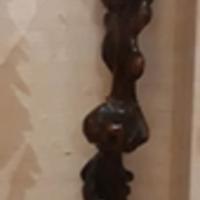 Image of Blackthorn Stick
This blackthorn walking stick is special for its association with the 1745 Rising. Soon after Prince Charles Edward Stuart (1720 - 1788) first arrived…
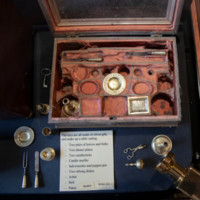 Image of Child’s play set (Clementina)
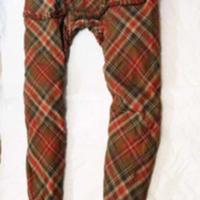 Image of BPC trews
Royal Stewart sett hard tartan trews with integral 'feet'. Traditional trews were not trousers, but long hose which were worn high up to the waist.…
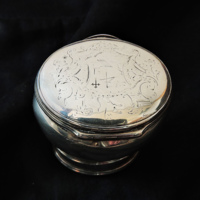 Image of Cluny Snuff mull
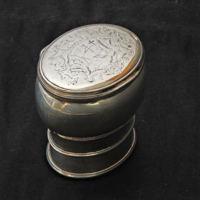 Image of Cluny Snuff mull
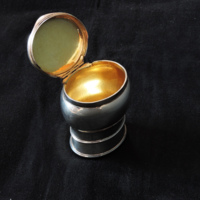 Image of Cluny Snuff mull
This is a silver baluster snuff mull with the heraldic arms of Cluny MacPherson set within a foliated scroll formed cartouche. The museum purchased…
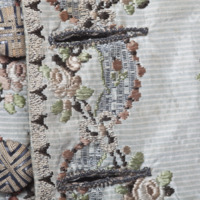 Image of BPC waistcoat
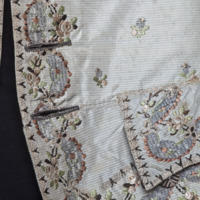 Image of BPC waistcoat
A pale green striped silk waistcoat that has been embroidered with rosebuds and silver thread. It is a textile with a fascinating history. The…
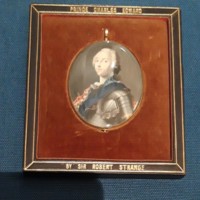 Image of BPC miniatures x 2 (R Strange)
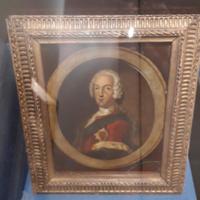 Image of BPC miniatures x 2 (R Strange)
Three examples of portraits after the engraving by Robert Strange (1721 -1792). Strange’s engraving was based on the Allan Ramsay (1713 – 1784)…
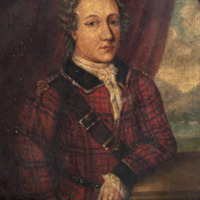 Image of Gentle Lochiel portrait
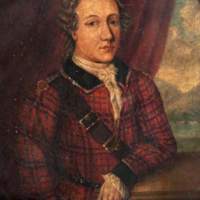 Image of Gentle Lochiel portrait
Portrait of Donald Cameron of Lochiel (1695–1748), ‘The Gentle Lochiel' in a gilt frame. Although this is a copy of a George Chalmers (1720–c.1791)…
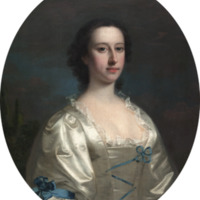 Image of Walkinshaw portrait
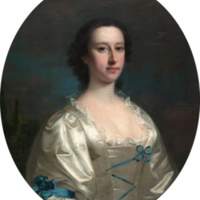 Image of Walkinshaw portrait
This is a very fine portrait of Clementina Walkinshaw (1720–1802), by renowned Scottish artist Allan Ramsay (1713 – 1784). Clementina became the…
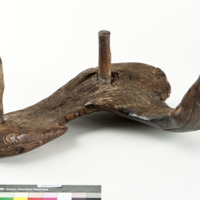 Image of Tree root stool
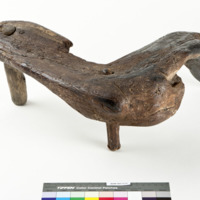 Image of Tree root stool
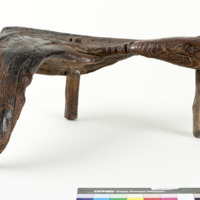 Image of Tree root stool
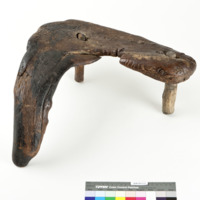 Image of Tree root stool
This unimposing curved stool made from a tree root has a fascinating history. A label attached to the object states “Stool on which Prince Charlie sat…
 Image of Glenfinnan Stone
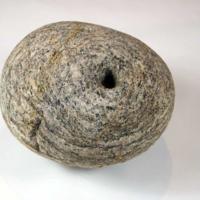 Image of Glenfinnan Stone
A large round boulder with a hole bored partially through it. This is a stone with an iconic history. It was originally from Glenfinnan and by…
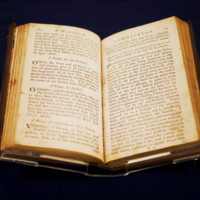 Image of Prayer book
A prayer book titled “A Manual for A Christian”. The prayer book was rebound in the 19th century when the inner and outer case were added. Sadly, no…
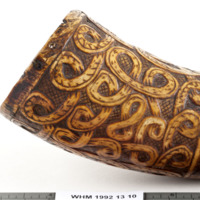 Image of Alasdair MacMhagister Alastair’s powder horn
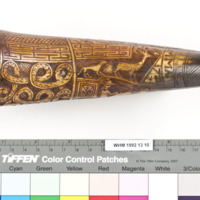 Image of Alasdair MacMhagister Alastair’s powder horn
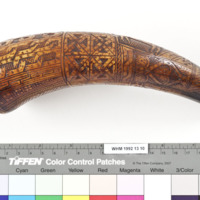 Image of Alasdair MacMhagister Alastair’s powder horn
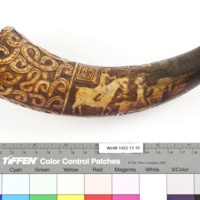 Image of Alasdair MacMhagister Alastair’s powder horn
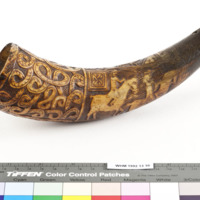 Image of Alasdair MacMhagister Alastair’s powder horn
A beautifully carved powder horn with a detailed Celtic design. Powder horns were generally made from horn and used to store gunpowder. This…
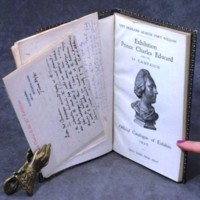 Image of WHM exhibition catalogue
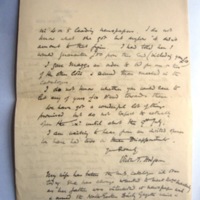 Image of WHM exhibition catalogue
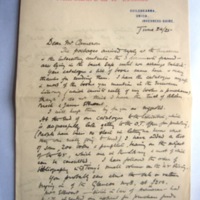 Image of WHM exhibition catalogue
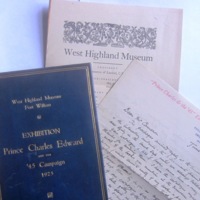 Image of WHM exhibition catalogue
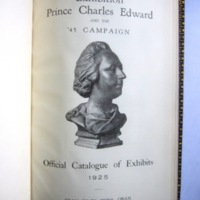 Image of WHM exhibition catalogue
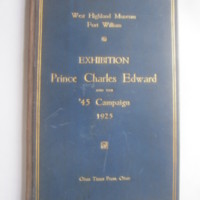 Image of WHM exhibition catalogue
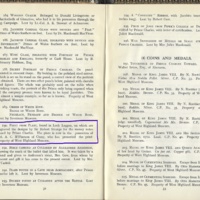 Image of WHM exhibition catalogue
A catalogue for the 1925 West Highland Museum’s exhibition titled “Prince Charles Edward and the ’45 Campaign”. The West Highland Museum was founded…
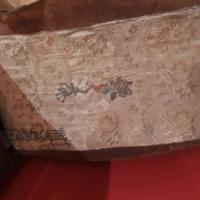 Image of Two-sided seat - Fassfern
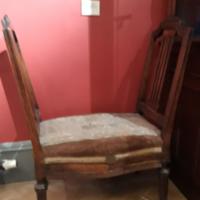 Image of Two-sided seat - Fassfern
A two-sided chair with an embroidered velvet seat said to have been used by Prince Charles Edward Stuart (1720 - 1788). The embroidered inscription…
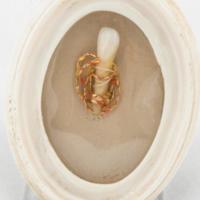 Image of BPC’s tooth
A tooth mounted in a hand-carved ivory frame. The tooth is said to have belonged to Prince Charles Edward Stuart (1720 - 1788). It is very rare and…
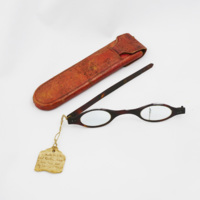 Image of Lord Lovat’s spectacles
Tortoiseshell framed spectacles with a leather case said to have belonged to Lord Lovat. Simon Fraser, 11th Lord Lovat, (1667 – 1747) was chief of…
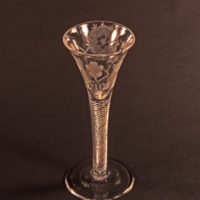 Image of Jacobite Glass
A fine example of a mid-18th century drinking glass with an air twist stem, engraved with Jacobite symbols. Drinking toasts to the exiled Stuart…
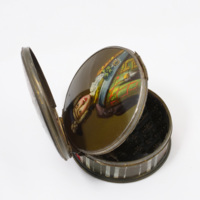 Image of Secret portrait snuff box
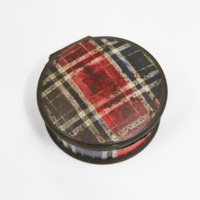 Image of Secret portrait snuff box
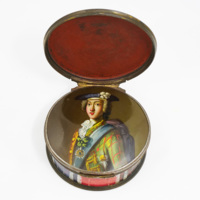 Image of Secret portrait snuff box
A circular box with an enamel tartan decoration. The hinged cover opens to expose a plain interior. However, the hidden double lid opens to reveal a…
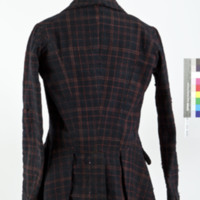 Image of Jacobite Jacket
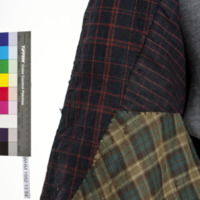 Image of Jacobite Jacket
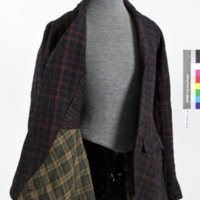 Image of Jacobite Jacket
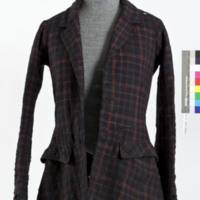 Image of Jacobite Jacket
A hard tartan jacket made in Uist. With linen lined sleeves. The colourful tartan lining differs between the skirts and bodice. It is a fantastic…
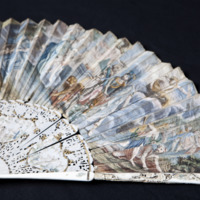 Image of Jacobite fan
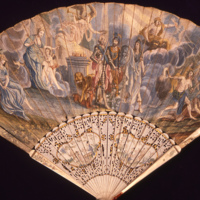 Image of Jacobite fan
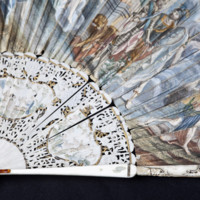 Image of Jacobite fan
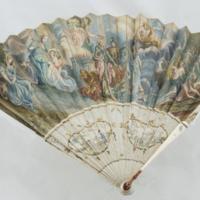 Image of Jacobite fan
A paper and ivory fan depicting Prince Charles Edward Stuart (1720 - 1788) with the Mars, Roman god of war, and Bellona, Roman goddess of war. They…
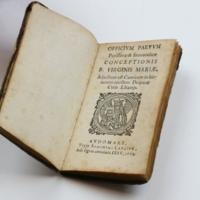 Image of Flora MacDonald’s mum’s prayer book
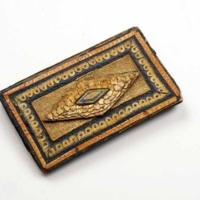 Image of Flora MacDonald’s mum’s prayer book
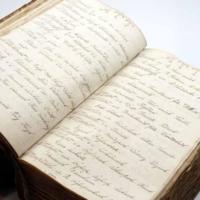 Image of Flora MacDonald’s mum’s prayer book
“Little Office of the Immaculate Conception of the Blessed Virgin Mary” prayer book. Originally bound in plain card it has decorated with an intricate…
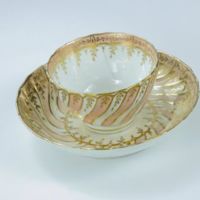 Image of Flora MacDonald’s tea cup
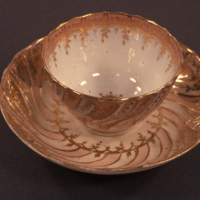 Image of Flora MacDonald’s tea cup
Bone china fluted handle less tea cup and deep saucer said to have been part of a set that belonged to Flora MacDonald (1722 -1790).
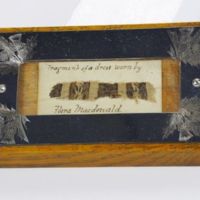 Image of Flora MacDonald’s dress fragment
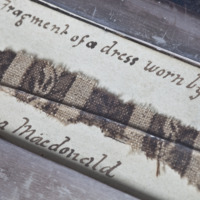 Image of Flora MacDonald’s dress fragment
A framed fragment of cloth decorated with brown sprigged stripes on a cream background. It is mounted on a glazed wooden and silver frame. The piece…
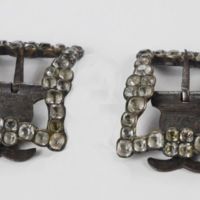 Image of Flora MacDonald’s buckles
A pair of decorative 18th century shoe buckles with paste 'jewels'. Said to have been worn by Flora MacDonald (1722 -1790). Flora was a heroine…
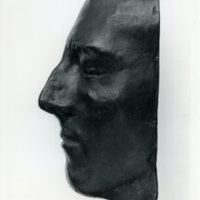 Image of BPC Death Mask Side
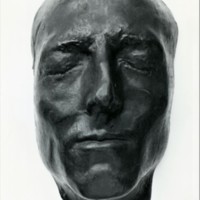 Image of BPC Death Mask front
Prince Charles Edward Stuart's (1720 - 1788) death mask. Thought to be a copy of an original made by Barnar dina Lucchesi, one of a family of…
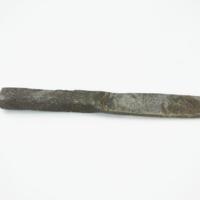 Image of Culloden Pike / knife
Metal knife blade with no handle. Although the knife is poorly constructed and rusting its important because it was purportedly found on Drumossie…
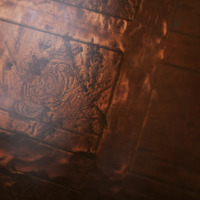 Image of D Y Cameron 1928 print
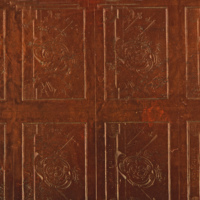 Copper plate for making bank notes
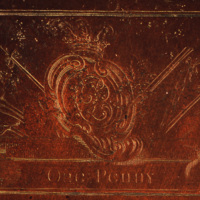 Copper plate close up
Print made by the prominent Scottish artist and etcher Sir D Y Cameron (1865 -1945). In 1928 The Strange Plate came into the museum’s collection,…
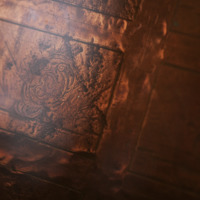 Image of Strange Plate
 Copper plate for making bank notes
 Copper plate close up
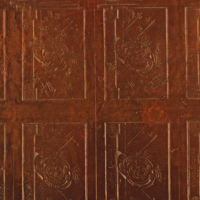
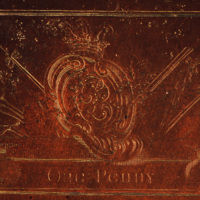
A copper printing plate commissioned by Prince Charles Edward Stuart (1720 - 1788) in 1746. Designed and etched by the artist Robert Strange (1721…
 Image of Secret Portrait
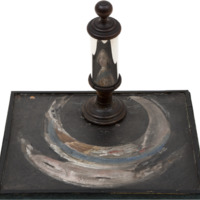 Image of Secret Portrait