Browse Items (502 total)
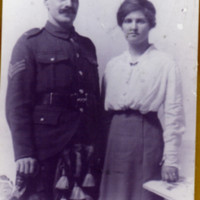 WWI John McCallum and Mary Anne McCullan (nee Cameron) on their wedding day 1916
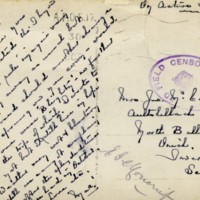 WW1 9 back
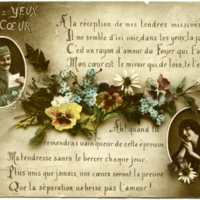 WW1 9
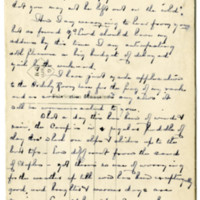 WW1 8 back
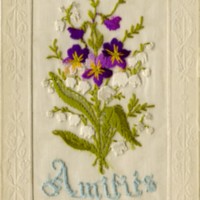 WW1 8
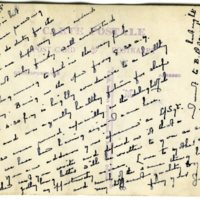 WW1 7 back
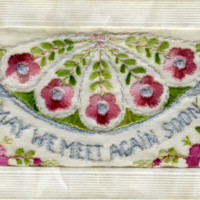 WW1 7
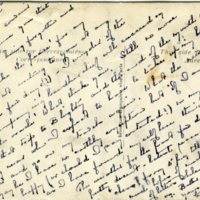 WW1 6 back
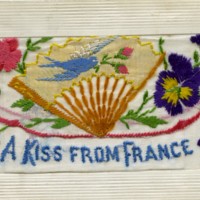 WW1 6
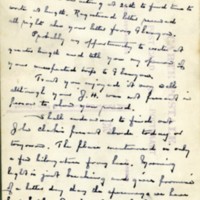 WW1 5 back
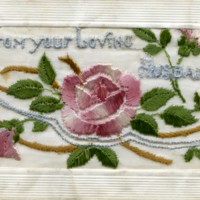 WW1 5
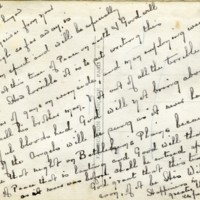 WW1 4 back
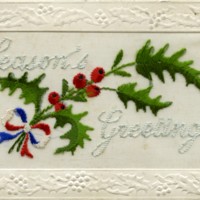 WW1 4
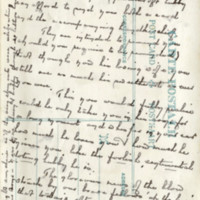 WW1 3 back
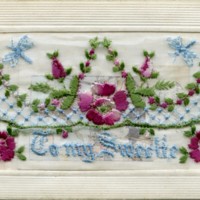 WW1 3
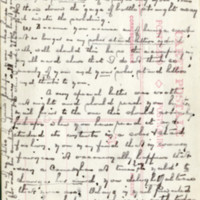 WW1 2 back
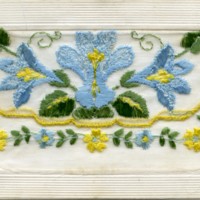 WW1 2
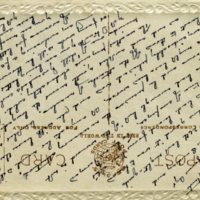 WW1 10 back
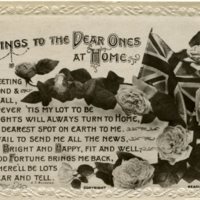 WW1 10
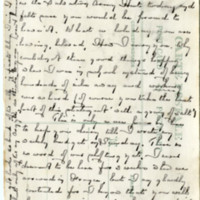 WW1 1 back
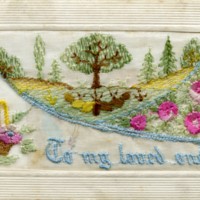 WW1 1
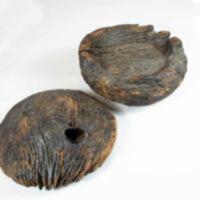
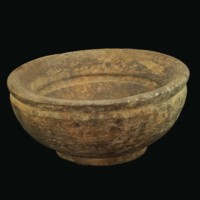 Wooden Bowl Image
 Wooden bowl 3D
wooden bowl from Governor's House.
Small wooden bowl possibly for soup of porridge. It was found in the Governor's House at Fort William when the fort was demolished in 1938.
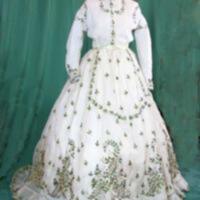 WHM100: Victorian
The perception of the Highlands changed radically during the Victorian era. Queen Victoria popularised Highland culture and the growth of the road and…
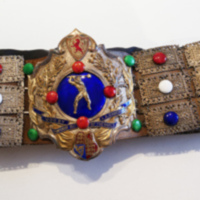 WHM100: Sport
Sport has always been pursued enthusiastically in the Highlands and participants often take advantage of our unique landscape, whether it be for…
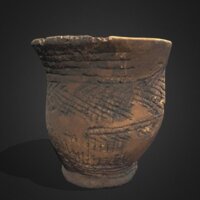
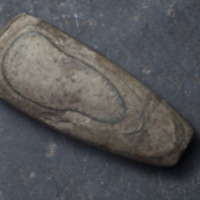 WHM100: Prehistory
Our fascinating archaeology collection includes ancient pottery and metalwork, arrowheads and stonework, salvage from the wreck of a Spanish Galleon,…
 WHM100: Military
The museum is located in Fort William. The town is named for the fort built here in 1690 and the area has historically been of great strategic and…
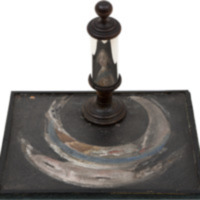 WHM100: Jacobite
Lochaber is known as the cradle of the 1745 Jacobite Rising. It was here at Glenfinnan that Bonnie Prince Charlie raised his father’s Standard to…
 WHM100: Highland Life
The rugged landscape and geographical isolation of much of the Scottish Highlands made it a relatively inaccessible place for much of its political…
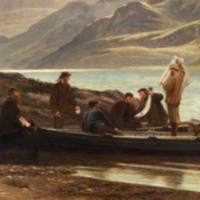 WHM100: Art
The museum has an important collection of fine art and photography in its collections from the 18th to 20th centuries. It was difficult to choose…
 WHM sequence with sound
These images were created as part of the Highland Threads digital exhibition - an online collection curated from fourteen Highland museum collections…
This pot still has a mysterious history. It was found abandoned anonymously on the steps of the museum in the 1920s. The damage was caused by some…
This glass bottle contains a fine whisky said to be almost 200 years old. The faded label reads "from Jas. Young, Family Grocer, Wine & Spirit…
A catalogue for the 1925 West Highland Museum’s exhibition titled “Prince Charles Edward and the ’45 Campaign”. The West Highland Museum was founded…
 West Highland Museum
The West Highland Museum 100 project showcases digital cultural heritage from the Western Highlands of Scotland. This collaboration between West…
This blackthorn walking stick is special for its association with the 1745 Rising. Soon after Prince Charles Edward Stuart (1720 - 1788) first arrived…
 Video of Fairy Pipes
Two pairs of pistols that belonged to Lochaber man Major James MacFarlane (1774 - 1849) who worked in India with the Honourable East India Company.…
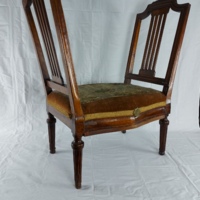 Two-sided seat
A two-sided chair with an embroidered velvet seat said to have been used by Prince Charles Edward Stuart (1720 - 1788). The embroidered inscription…
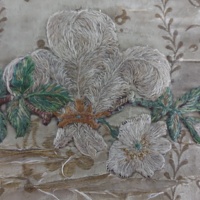 Two sided chair images
 Tree root stool 3D
3D model of tree root stool
This unimposing curved stool made from a tree root has a fascinating history. A label attached to the object states “Stool on which Prince Charlie sat…
Print made by the prominent Scottish artist and etcher Sir D Y Cameron (1865 -1945). In 1928 The Strange Plate came into the museum’s collection,…
A copper printing plate commissioned by Prince Charles Edward Stuart (1720 - 1788) in 1746. Designed and etched by the artist Robert Strange (1721…
Blog looking at the history of the mort safe
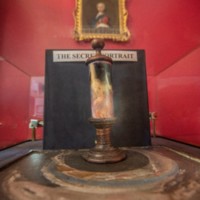 The Secret Portrait
An anamorphic hidden painting of Prince Charles Edward Stuart (1720 - 1788). At first glance the object appears to be a smear of oil paints on a…
A tooth mounted in a hand-carved ivory frame. The tooth is said to have belonged to Prince Charles Edward Stuart (1720 - 1788). It is very rare and…
Prince Charles Edward Stuart's (1720 - 1788) death mask. Thought to be a copy of an original made by Barnar dina Lucchesi, one of a family of…
This basket hilted broadsword dates from either the late 17th or early 18th century. Basket-hilts were swords with a basket-shaped guard to protect…
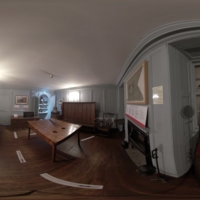 The Governor's room Photosphere
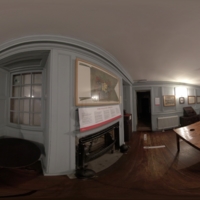 The Governor's room Photosphere
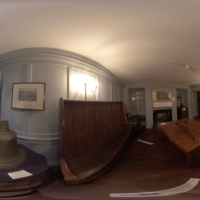 The Governor's room Photosphere
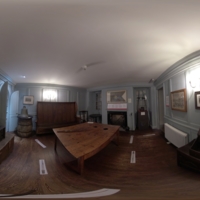 The Governor's room Photosphere
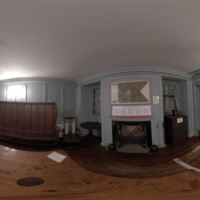 The Governor's room Photosphere
This is the largest object in the West Highland Museum collection and maybe one of the most intriguing. It came from the old fort (An Gearasdan) at…
A large round boulder with a hole bored partially through it. This is a stone with an iconic history. It was originally from Glenfinnan and by…
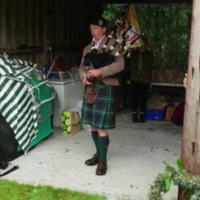
Said to have been made more than 800 years ago, the Faery bagpipes of Kinlochmoidart, are very special as they are thought to be one of the oldest set…
This object is a bit of a mystery. Known as the Clanranald Anvil, it probably dates back to the 14th or 15th century. It is a very heavy irregular…
This decorative dirk is part of a Highland outfit. In addition to the blade there is small knife and fork that fit neatly into the leather scabbard.…
This gun by tradition is the Appin murder weapon. The Appin murder took place on 14 May 1752 in the aftermath of the 1745 Jacobite Rising. It is an…
A hard tartan jacket made in Uist. With linen lined sleeves. The colourful tartan lining differs between the skirts and bodice. It is a fantastic…
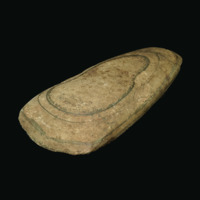 Stone Axe Image
 Stone Axe 3D
Stone axe 3D model
This Neolithic stone axe was found at Keppoch near Roy Bridge in 1876. It came into the museum’s collection in 1936. Axes were adapted for many uses…
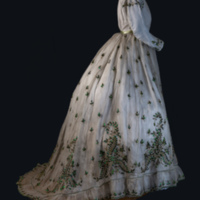 Stills
These images were created as part of the Highland Threads digital exhibition - an online collection curated from fourteen Highland museum collections…
This leather-bound stalker’s telescope has been selected because of its association with the Highlands. It is a typical example of equipment ghillies…
By the late 1890s a unique system of mail dispatch had developed on the remote Scottish archipelago of St Kilda. Letters were enclosed in a waterproof…
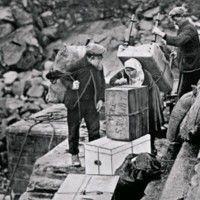 St Kilda Evacuation Image
This spinning wheel used for spinning thread or yarn from fibres was made in the French pattern, and was gifted to the West Highland Museum along with…
These are two silver Spanish pieces of eight found in Tobermory Bay off the Isle of Mull. The coins made an unusual journey to arrive in the West…